Starting & Scaling in 2027
Through the IP Engine: How Singapore Brands Navigate 4 Macroeconomic Shocks by Commercialising Defensible, Asset-Light Intellectual Property
Conventional business advice tells founders to "stay laser-focused on what you do; don't reinvent new values." Yet when generational shifts, pandemics, geopolitical tariffs, and rent inflation strike simultaneously, static operators get crushed. Here is how LEGO Group, Charles & Keith, Eu Yan Sang, and Banyan Group built compounding IP engines—and how Singapore SMEs can replicate their architecture under Enterprise Singapore's unified EDGE Grant.
The "Single-P" Commodity Trap vs. The IP Engine
2026–2027 Empirical Audit"Is your business an asset-light IP engine, or just a high-overhead jobbing shop?"
In July 2026, a sobering market investigation documented the sharp contraction of celebrated Singapore F&B icons across China: BreadTalk shrank from 460 China outlets to roughly 200 and exited Beijing entirely; Jumbo Seafood's China revenue fell 27.6% (from S$26.1 million to S$18.3 million); and Song Fa Bak Kut Teh contracted to a single store in Shanghai.[6]
For two decades, a generic "Singapore quality halo" was enough to command prime mall space abroad. Today, that halo is mere background information. The brands that compounded enterprise value across crises did so by unbundling their core know-how into defensible Product, Channel, Brand, and Culture (PCBC) intellectual property.
The 4 Macroeconomic Shocks Compressing Asset-Heavy Singapore Operators
Why engaging a strategic IP consultant in Singapore is no longer a legal formality, but a balance-sheet survival imperative for 2027:
The Johor-Singapore RTS Link (10,000 Pax/Hour)
With cross-border rail capacity reaching 10,000 passengers per hour per direction and a 3.3x MYR purchasing-power differential, undifferentiated Singapore retail, F&B, and wellness services face up to S$2.1 billion in annual domestic consumer leakage unless protected by proprietary brand and product IP.
34.4% Occupancy Cost Ratio & 12.1% F&B Lease Churn
Suburban and prime REIT rental reversions have pushed total occupancy costs to 34.4% of gross turnover for traditional operators. Relying on physical square footage without high-margin CPG, e-commerce, or licensing revenue turns landlords into the primary beneficiary of your enterprise effort.
S-Pass / Work Permit Dependency Ceilings
Progressive Wage Model (PWM) adjustments and foreign workforce quota ratios prevent linear headcount scaling. Only codified Standard Operating Procedures (SOPs), central kitchen/GMP automation, and asset-light franchise licensing decouple revenue growth from domestic payroll.
Erosion of Unprotected Service Workflows
Generic agency, design, and operational services face rapid price compression from enterprise AI. Competitive advantage accrues to companies that own registered trademarks, patents, clinical trial datasets, and proprietary AI-enabled domain workflows.
The PCBC IP Engine: 4 Vectors of Crisis-Proof Scaling
Maintaining consistency with our global expansion advisory frameworks, the PCBC Model (Product, Channel, Brand, Culture) diagnoses how top-performing enterprises convert operational capabilities into high-multiple intellectual property.
The "Format Unbundling" Matrix: Commercialising New IP Categories
In 1996, brothers Charles and Keith Wong realized that buying wholesale shoes from Malaysia and China to resell at their Ang Mo Kio shop offered zero pricing power or differentiation. With less than S$50,000 in renovation capital and supplier credit, they opened their first in-house design boutique at Amara Shopping Centre.[1]
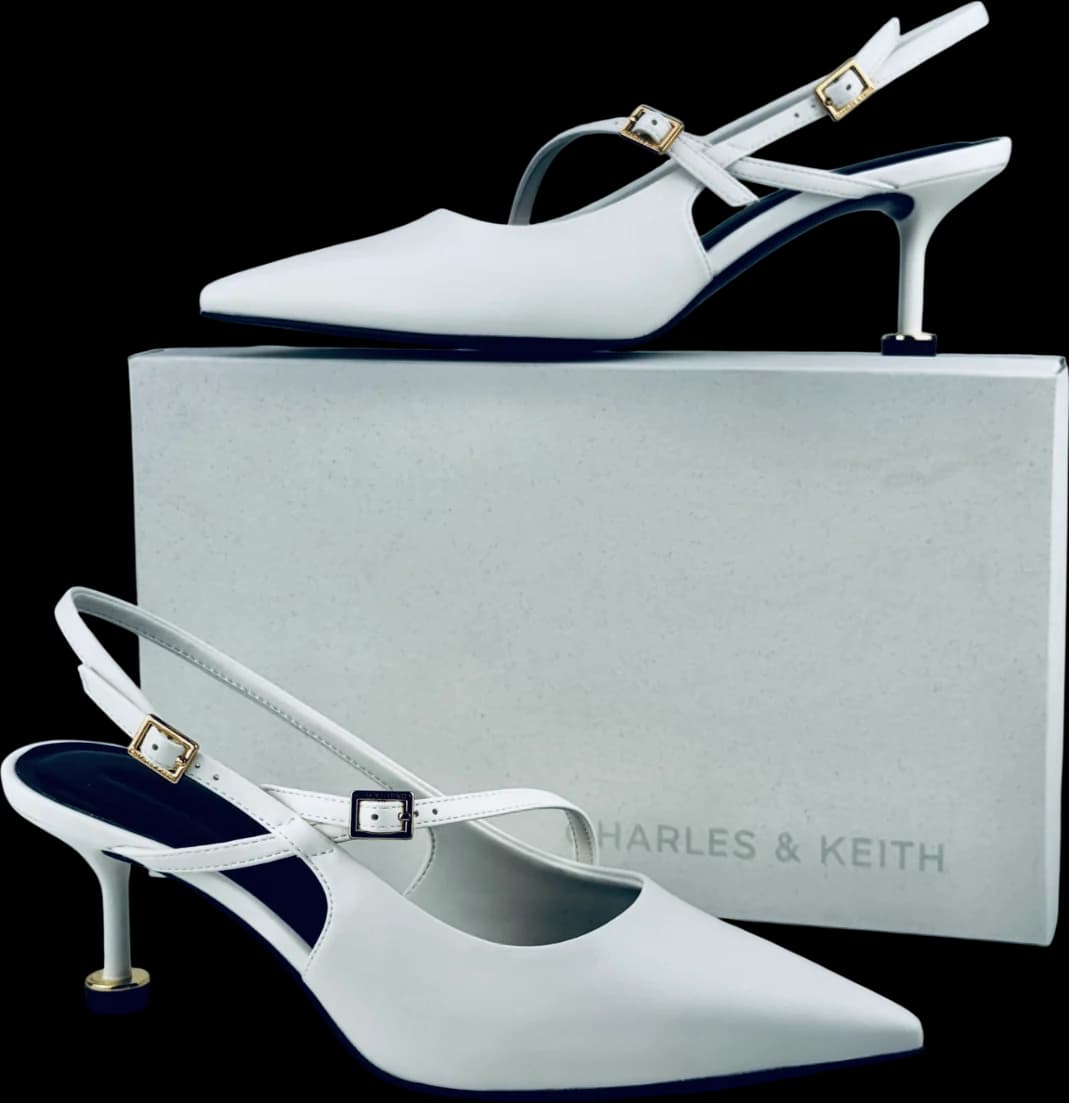
More importantly, they did not remain trapped in footwear. In 2005, observing Middle Eastern women in Dubai who wore traditional abayas and used bags and shoes as their primary expression of personal style, Charles & Keith commercialised Handbag IP. Because handbags require no shoe-sizing inventory depth (`EU 35–41`), the category unlocked superior working-capital velocity and now generates approximately 50% of Charles & Keith's global revenue across 600+ stores.[1]
Eu Yan Sang & LEGO Format Evolution
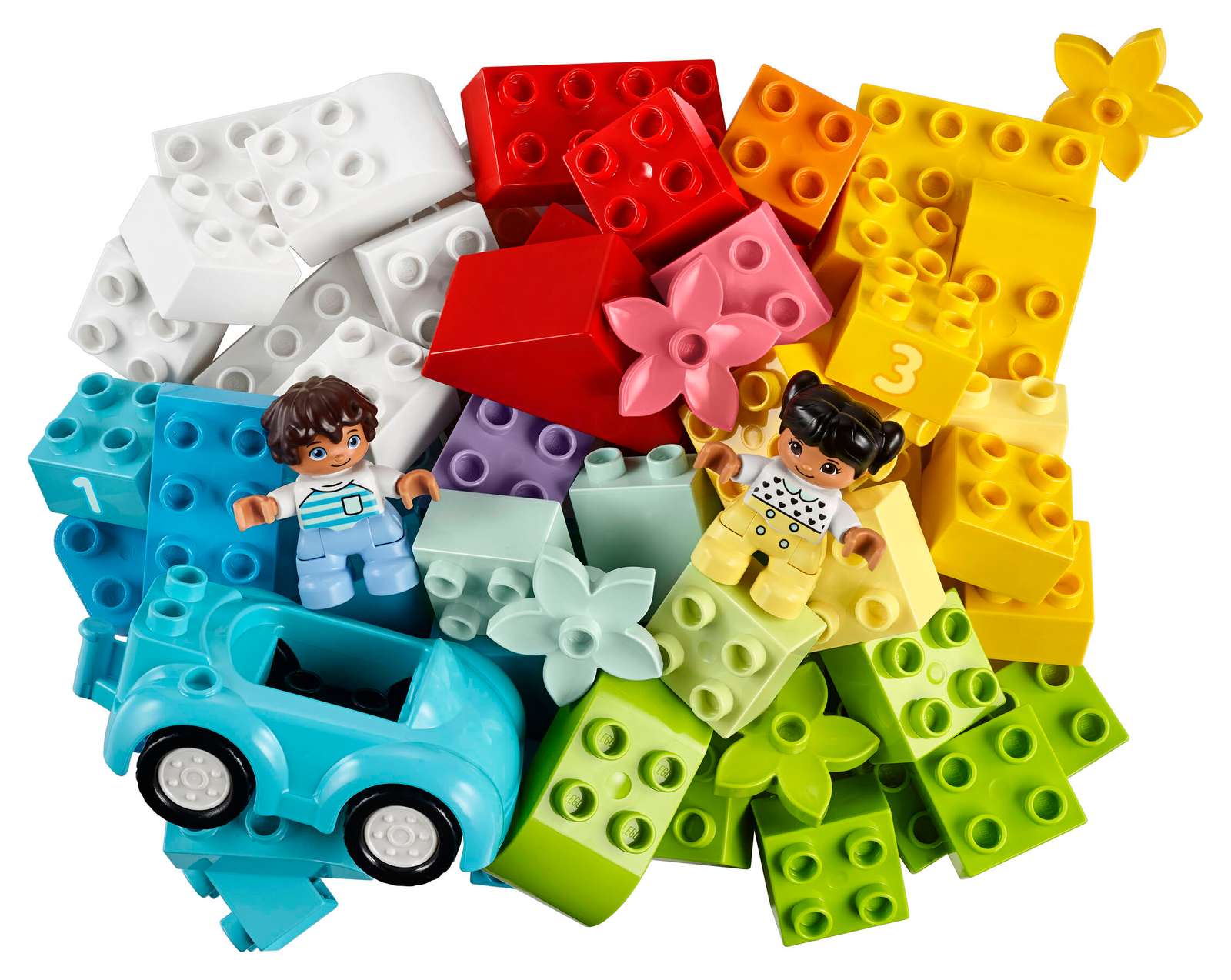
Eu Yan Sang unbundled bitter raw herbs requiring three hours of boiling into 900 standardized CPG SKUs (capsules, teabags, bottled bird's nest).[4] Similarly, when LEGO Group's original plastic brick patent expired, it unbundled its system of play into Mindstorms robotics, video games, and Warner Bros' The LEGO Movie ($468M global box office).
Banyan Group Branded Residences IP
Rather than relying solely on nightly hotel occupancy, Banyan Group unbundled its sanctuary architectural and wellness IP into Branded Residences—generating S$172.6 million in sales in 1H2026 alone (+38% YoY).[5] As Charles Wong summarized his product philosophy: "We like the Apple model — of lesser designs for the whole world."[1]
Asset-Light Decoupling & Counter-Cyclical Crisis Arbitrage
Historically, hospitality and retail expansion required massive balance-sheet debt to purchase land and fund store buildouts. Over the past decade, Banyan Group actively divested heavy real estate assets in China and Seychelles while retaining 20-to-30-year hotel management and brand licensing contracts—scaling past 100 resorts globally (celebrating its landmark 100th property at Mandai Rainforest Resort by Banyan Tree in Singapore) with over 140 properties in its pipeline.[2, 5]
Similarly, Charles & Keith used macroeconomic crises as an entry catalyst: signing its S$20,000/month Causeway Point lease during the 1997 Asian Financial Crisis (generating S$100,000 in month-one sales against a S$60,000 target), entering Indonesia in 1998 (43 stores today), partnering with Dubai's Apparel Group during the 2003 Iraq War to open over 70 Middle East stores (with 115 more planned over the next five years), and launching its own e-commerce platform in 2004 before entering China during the 2008 Global Financial Crisis.[1]
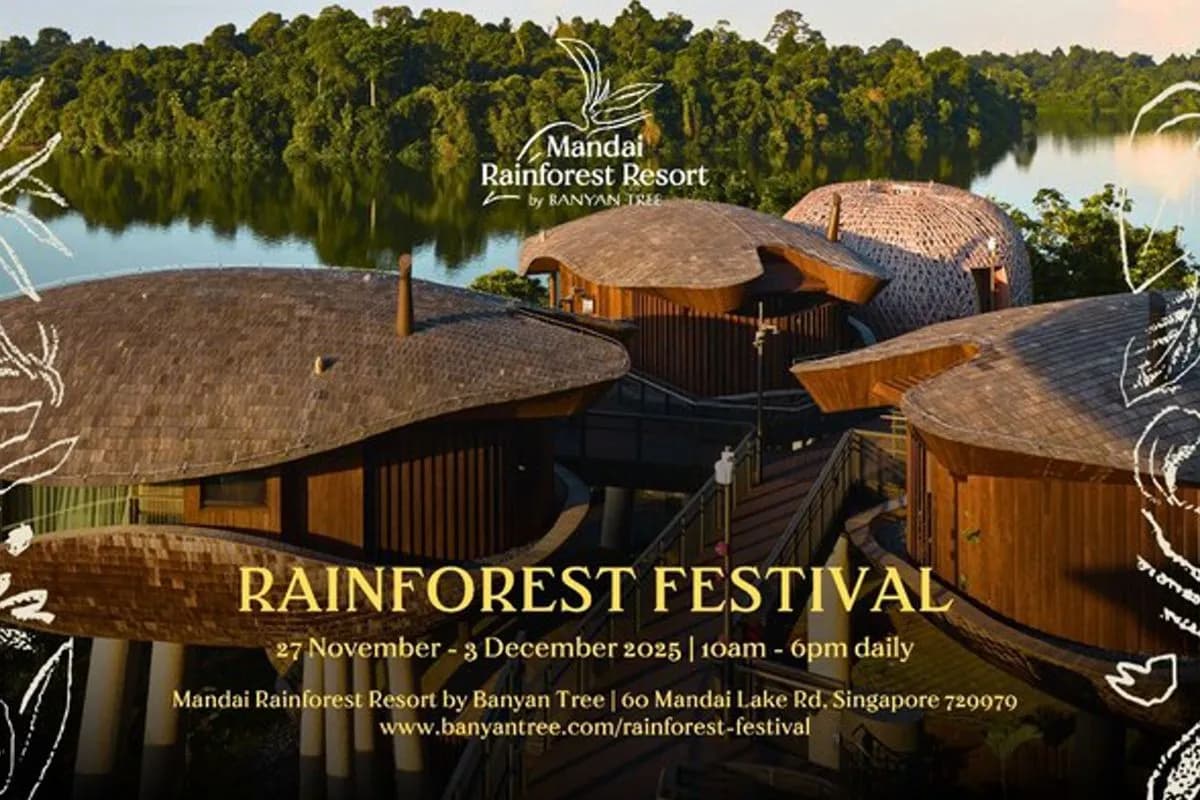
Source: Antara News — "Banyan Group celebrates grand opening of 100th resort and Singapore homecoming"[2]
Multi-Tier Portfolio Architecture & Zero-Discounting Price Integrity
Preventing Flagship Dilution Across Price Tiers
When global hotel occupancy dropped from 90% to 0% during COVID-19 in 2020, Executive Chairman Ho Kwon Ping took a 100% pay cut and held transparent town halls, but strictly refused to panic-discount Banyan Tree room rates into mass-market territory. Instead, the group segmented demand across 10 distinct brands—Ultra-Luxury (Banyan Tree, Veya), Upscale (Angsana, Dhawa), and Midtier Extended-Stay (Cassia, Homm)—preserving flagship pricing power for its 2025–2026 earnings surge.[5]
LVMH Strategic Validation & Met Gala Badging
In 2011, Charles & Keith sold a 20% stake to L Capital Asia (LVMH's private equity arm). As Apparel Group CEO Neeraj Teckchandani noted, the LVMH stamp gave global mall landlords instant confidence before the Wong brothers bought back 100% control in 2016.[1] By May 2025, custom Charles & Keith pieces debuted on the Met Gala red carpet worn by Shakira and Nicole Scherzinger alongside indie designer collaborations (Cecilie Bahnsen, Shushu/Tong).[1]
Scientific Validation as Moat: The S$21M to S$808M Eu Yan Sang Buyback
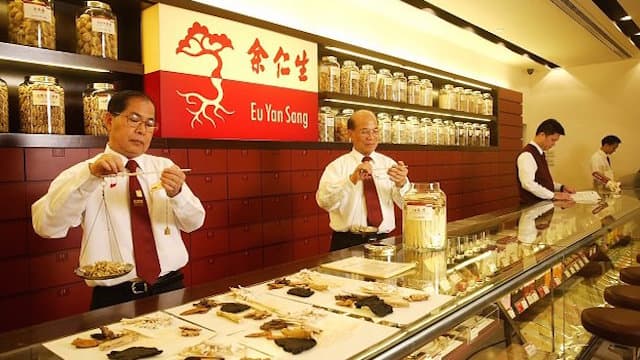
Following the 1941 death of founder Eu Kong's son Eu Tong Sen, the Eu Yan Sang estate was divided among 13 sons from 11 wives—leading to 50 years of family fragmentation. On 29 March 1990, property developer Lum Chang acquired majority control to strip the company's real estate shell. Three years later, fourth-generation heir Richard Eu teamed up with cousins Robert and Clifford to execute a S$21 million leveraged buyback.[4]
Recognizing that "the problem wasn't TCM itself, but how it was presented," Richard Eu partnered with The Chinese University of Hong Kong (CUHK), Hong Kong Baptist University, and NUS to subject century-old remedies like Bak Foong Pills to randomized controlled trials (RCTs), chemical herb fingerprinting, Australian TGA pharmaceutical compliance, and EYSGAP-Herbs farm protocols.[3, 4]
By building an integrated network of 170+ retail stores, 30 TCM clinics, and a HK$110 million GMP factory generating S$297 million in FY2023 revenue, Eu Yan Sang became an institutional asset that Rohto Pharmaceutical (~60%) and Mitsui & Co. (~30%) acquired for S$808 million in June 2024—a 38-fold return on the 1993 buyback price.[4]
Legacy Commodity Operator vs. The PCBC Scaled IP Engine
Why institutional acquirers (Rohto-Mitsui, LVMH L Capital, Tower Capital/Temasek) pay 15x–38x multiples for codified IP platforms while commodity operators trade at 3x–5x EBITDA.
| Enterprise Vector | Legacy Commodity Operator (The 95% Trap) | The PCBC Scaled IP Engine (Top 5%) |
|---|---|---|
| Primary Revenue Unit | Manual labor hours; physical store or table turnover | Standardized CPG (900 SKUs), Handbag/Design IP, Branded Residences & Royalties |
| Gross Margin Profile | 30% – 45% (Compressed by landlord rent & wage inflation) | 65% – 85% (Near-zero marginal cost of IP replication) |
| Balance Sheet Exposure | Heavy commercial security deposits, kitchen & resort capex | Asset-light; third-party developers & master franchisees fund 100% of buildout |
| Market Trust Mechanism | Fading "Singapore quality halo" or unverified claims | University Clinical RCTs (CUHK/NUS), TGA/GMP standards & LVMH/Met Gala badging |
| Valuation Exit Multiple | 3x – 6x EBITDA (Or stripped for real estate shell) | 15x – 38x Valuation Multiple (e.g. Eu Yan Sang S$21M → S$808M Exit) |
The ASEAN SME Execution Roadmap & Unified EDGE Grant Co-Funding
Singapore SMEs can co-fund up to 50%–70% of qualifying consultancy expenses under the Enterprise Development Grant (EDG), Market Readiness Assistance (MRA), and—effective 30 September 2026—Enterprise Singapore's unified EDGE Grant across a structured three-phase trajectory:
Year 1: IP Foundation
Engage a certified IP consultant in Singapore to conduct an Intangible Asset (IA) audit, isolate your timeless core formula, and file pre-emptive Madrid Protocol trademarks across target ASEAN and global nodes.
Year 2: Format Unbundling
Partner with a brand consultant in Singapore and franchise consultant to commercialise high-margin CPG, SaaS, or Handbag-style unbundled categories, codify Master Franchise SOP manuals, and secure university/ISO validation.
Year 3+: Platform Scale (15x–38x)
Scale asset-light management, licensing, and master franchise contracts regionally—re-rating enterprise valuation from a 3x–5x service multiple to a 15x–38x IP platform multiple.
The 2027 Funding Stack: Unified EDGE Grant + IRAS EIS 400% IP Tax Deduction
Singapore provides the most capital-efficient jurisdiction in Asia to build, protect, and commercialise intellectual property. By working with an IPOS GoBusiness IP Grow recognized IP consultant in Singapore, enterprises can stack non-dilutive grant support with enhanced tax deductions:
Unified EDGE Grant (Up to 50%–70%)
Consolidating legacy EDG, MRA, and PSG schemes, the EDGE Grant co-funds strategic IP commercialisation, brand portfolio architecture, franchise SOP codification, and international market entry with TR 43 / Certified Management Consultant governance.
EIS 400% Tax Deduction on IP Registration
Claim a 400% tax deduction on up to S$400,000 of qualifying IP registration expenditure (patents, trademarks, and registered designs) per Year of Assessment—or opt for a non-taxable cash payout of up to S$20,000 (20% conversion on up to S$100,000 of qualifying spend).
IP Strategy, Valuation & Licensing Advisory
FT Synergist is listed on the official IPOS GoBusiness IP Grow Directory for both IP Strategy and IP Brokerage & Licensing—bridging the gap between statutory trademark/patent filings and commercial royalty monetization.
Frequently Asked Questions: IP Consulting & Intangible Asset Strategy in Singapore
1. What does an IP consultant in Singapore do beyond basic trademark or patent filing?
While patent agents and trademark attorneys handle statutory registration, a strategic IP consultant in Singapore —such as FT Synergist, listed on the IPOS GoBusiness IP Grow Directory for IP Strategy and IP Brokerage & Licensing—audits, values, unbundles, and commercialises your intangible assets (patents, trademarks, proprietary formulations, design systems, and franchise SOPs) into high-margin licensing, royalty, and CPG revenue streams.
2. How do Singapore SMEs fund IP consulting and intangible asset commercialisation in 2026–2027?
Singapore enterprises can combine two sovereign mechanisms: (1) Enterprise Singapore's unified EDGE Grant (effective 30 September 2026, replacing EDG, MRA, and PSG), which co-funds up to 50%–70% of qualifying IP strategy, strategic brand architecture, and overseas market readiness consultancy; and (2) the IRAS Enterprise Innovation Scheme (EIS), which provides a 400% tax deduction on up to S$400,000 of qualifying patent, trademark, and design registration costs per Year of Assessment.
3. Why did Eu Yan Sang achieve an S$808 million exit while other Singapore heritage brands contracted?
Eu Yan Sang transformed unstandardized traditional remedies into defensible Culture and Product IP by partnering with CUHK, HKBU, and NUS for randomized controlled trials (RCTs), chemical herb fingerprinting, Australian TGA pharmaceutical certification, and 900 standardized CPG SKUs. This codified IP engine enabled Rohto Pharmaceutical and Mitsui & Co. to acquire Eu Yan Sang at an S$808 million valuation in June 2024—a 38x return over the family's S$21 million buyback in 1993.
4. How does the PCBC Model help Singapore brands survive the 2026–2027 RTS Link and rental shocks?
The FT Synergist PCBC Model (Product, Channel, Brand, Culture) decouples revenue growth from domestic floor space and headcount. By unbundling high-margin Product IP (like Charles & Keith's handbag line generating ~50% of global sales), transitioning to asset-light Channel IP (like Banyan Group's 100+ managed resorts), protecting Brand IP across multi-tier portfolios, and validating Culture IP through clinical or institutional standards, Singapore SMEs turn macroeconomic shocks into expansion catalysts.
Institutional Governance & Statutory Framework Alignment
Download the Complete 19-Slide Executive Presentation Deck
Access the full widescreen presentation PDF including the Format Unbundling Matrix, the S$808M Valuation Flywheel, Banyan Group's Asset-Light Velocity Graph, and the 3-Year Upward Growth Trajectory.
Prepared by Frederick Tan, Principal Management Consultant (SCMC-1810-P0236) • Inquiries: fredtan@ftsynergist.com